I know the feeling of waking up with a dream still wrapped around you like a fog—images, faces, and scenes that feel so real, yet make no sense at all. Over the years, I’ve learned that our dreams are not random; they’re tender messages from the deepest parts of us, offering clues, healing, and next steps for our spiritual path.
When you treat your dreams like sacred conversations instead of weird nighttime movies, everything shifts. In this guide, I’ll walk you through seven simple steps I use to understand my own dreams, so you can turn your nightly stories into soulful wisdom.
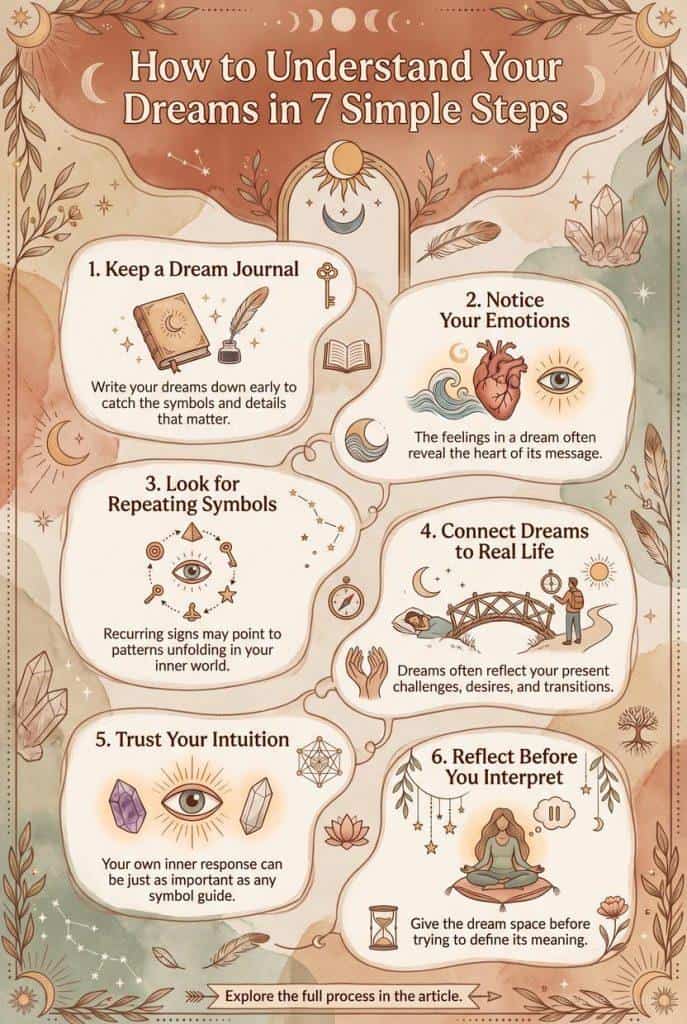
How to Understand Your Dreams in 7 Simple Steps
1. Keep a Dream Journal
The very first step is simple: write your dreams down as soon as you wake up. Keep a notebook or journal by your bed and jot every detail you remember—images, people, places, and even tiny fragments.
Dreams fade fast, so capture them before you even check your phone or talk to anyone. Over time, your dream journal becomes a map of your inner world, showing patterns, symbols, and themes you might miss otherwise.
2. Notice Your Emotions
Don’t just focus on what happened in the dream—tune into how you felt. Were you scared, relieved, peaceful, annoyed, confused, or excited?
Often the feeling carries more meaning than the story itself. For example, a dream about being lost might not be about the location at all; it might be mirroring a feeling of being unsure or stuck in your waking life.
3. Look for Repeating Symbols
When the same symbol shows up again and again, your subconscious is trying to get your attention. Maybe you keep dreaming of water, houses, phones, bridges, or being late.
You don’t have to know the “official” meaning of each symbol. Instead, gently ask yourself, “What does this image mean to me personally?” and let your own inner spiritual guidance answer.
4. Connect Dreams to Real Life
Dreams love to exaggerate what’s already happening in your life. They stretch your everyday stress, desires, fears, and big changes into dramatic stories so you’ll finally notice them.
If you’re feeling anxious about work, you might dream about failing a test or missing an important flight. If you’re starting a new relationship, you might dream of doors, new rooms, or moving into a fresh space.
5. Reflect Before You Interpret
Instead of rushing to Google your dream symbols the moment you wake up, pause. Sit in silence for a minute or two and replay the dream in your mind like a gentle movie.
Notice what parts stand out or feel “charged” with energy. This short moment of reflection creates space for your inner voice to speak, instead of letting outside opinions drown it out.
6. Trust Your Intuition
You are the best interpreter of your dreams. Yes, books and websites can offer ideas, but your own gut feeling will always be more accurate for you.
Ask yourself, “If I had to guess, what might this dream be showing me?” Then listen to the first quiet, honest answer that comes through, even if it’s just a soft whisper or a simple word.
7. Explore Spiritual Meaning and Support
Once you’ve journaled, felt, connected, and reflected, you’re ready for the final step: invite in spiritual support. You might pray, meditate, pull a tarot or oracle card, or simply sit in stillness and ask, “What is the lesson you want me to see?”
You can also work with rituals to honor powerful dreams—light a candle, hold a crystal that feels aligned with the dream, or spend a few minutes in nature letting the message settle into your body. This step helps you move from “just information” into true healing and shift in your daily life.
Practical Tips to Go Deeper with Your Dream Practice
Set a Gentle Intention Before Bed
Right before sleep, speak to your higher self or the universe as if you’re talking to a close friend. You might say, “Tonight, I’m open to remembering any dream that will support my healing,” or “Please show me what I most need to know in a kind, loving way.”
This simple act turns your sleep into conscious dreamwork. It signals to your soul that you’re ready to use your dreams as a spiritual growth practice.
Create a Calm Sleep Space
Your bedroom energy really matters for dreamwork. Keep your space as peaceful as possible—soft lighting, fresh air, maybe a favorite crystal or a bit of moon-inspired decor by your bed.
Try to limit screens for at least 20–30 minutes before sleep. When your nervous system is calmer, your dreams become clearer and easier to remember, helping your dream interpretation feel less chaotic and more grounded.
Share Your Dreams with a Safe Person
Sometimes saying a dream out loud reveals layers you didn’t notice on your own. A trusted friend, partner, therapist, or spiritual coach can offer a gentle mirror and ask helpful questions.
You don’t need them to “fix” or decode the dream; you just need a kind witness. Their reflections might help you see where your soul is asking for more love, boundaries, or change.
Notice Body Sensations as You Recall the Dream
When you retell or reread a dream, pay attention to your body. Do your shoulders tense, does your chest feel warm, does your stomach flutter?
These sensations are more clues from your inner world. Your body often reacts before your mind understands, especially when a dream is pointing to old wounds or new invitations in your life.
Be Okay with a Little Mystery
Not every dream will make perfect sense, and that’s completely okay. Some dreams are like poems or abstract art—they are meant to be felt more than solved.
If a dream stays foggy, you can simply say, “Thank you for this” and let it rest. Often the meaning becomes clear days or weeks later, when something in your waking life lines up with that strange nighttime story.
Bringing Dream Wisdom into Your Everyday Life
The real magic happens when you start living differently because of what your dreams show you. Maybe a dream about running in circles reminds you to slow down your schedule. Maybe a dream of speaking your truth pushes you to finally have that honest conversation.
You can turn a dream into a tiny action step: write a boundary script, schedule a therapist session, drink more water, call a friend, or start a new creative project. When you act on your dreams with love, you send a powerful message to your inner world: “I’m listening.”
So next time you wake up from a vivid dream, don’t just shrug it off and scroll your phone. Come back to these seven simple steps—journal, feel, notice, connect, reflect, trust, and invite spiritual support—and let your dreams become a sacred part of your path. Your nights can be more than rest; they can be a conversation with your soul.
