When I first learned about lucid dreaming, it felt like discovering a secret doorway inside my own mind. The idea that I could wake up inside a dream and explore it on purpose lit up something really magical in me.
If you’re curious about playing in that space between sleep and awareness, you’re in the right place. Today I’ll walk you through 10 easy, soulful ways to have a lucid dream, so you can tap into that inner world with more clarity, calm, and joy.
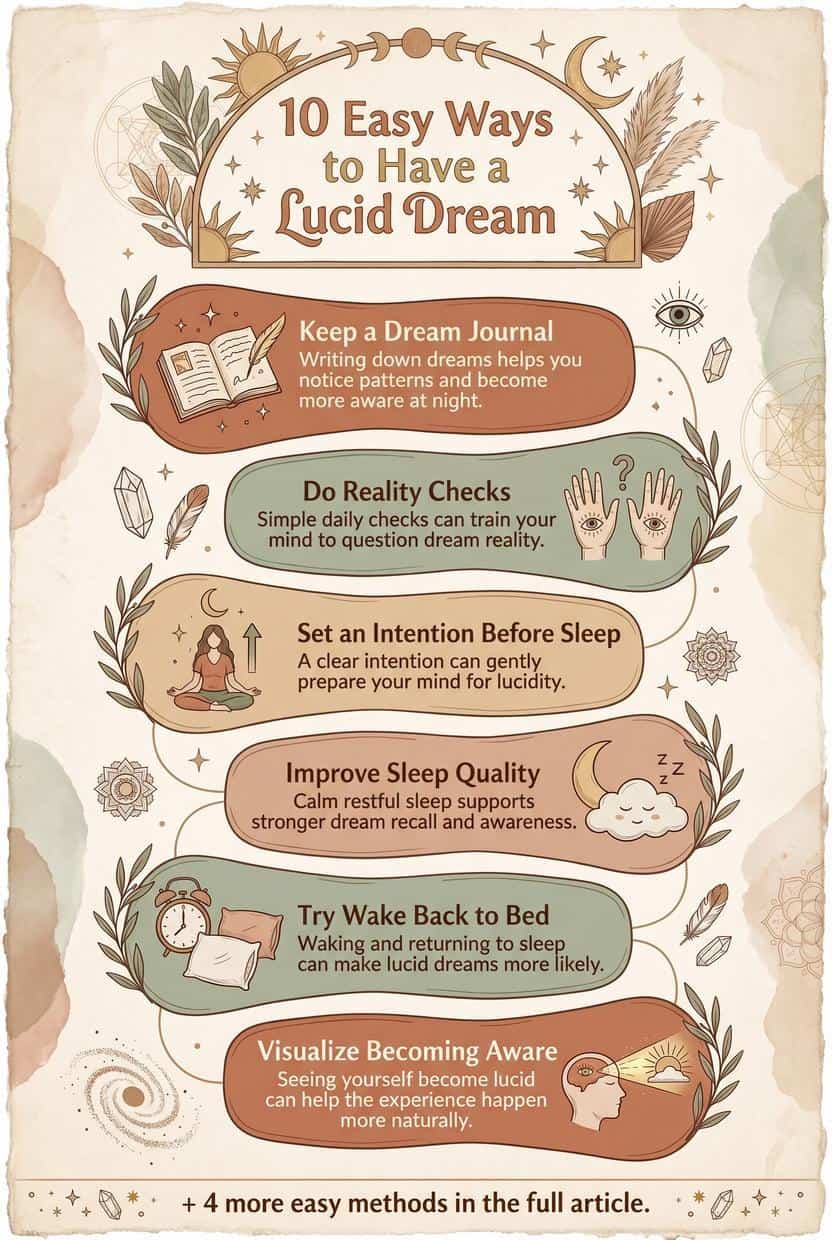
1. Keep a Dream Journal
Writing your dreams down tells your mind, “This matters to me.” Keep a notebook or notes app right by your bed and write as soon as you wake up, even if it’s only a few words.
Over time, your dream recall will get stronger and your dreams will feel clearer and easier to remember. This makes it much more likely you’ll recognize when you’re dreaming.
2. Do Reality Checks During the Day
Reality checks are little tests you do to see if you’re awake. For example, look at your hands and ask, “Am I dreaming?” or try to push one finger through the palm of the other hand.
Do this several times a day, especially when something odd or emotional happens. The habit often carries into your dreams, and when your finger suddenly does go through your palm, you’ll realize you’re in a lucid dream.
3. Set an Intention Before Sleep
Right before you fall asleep, speak to yourself with love and clarity. You might say, “Tonight I will notice when I’m dreaming,” or “I become aware and calm in my dreams.”
You can repeat this like a gentle mantra as you drift off. This simple intention-setting helps your subconscious mind focus on lucid dreaming while your body rests.
4. Improve Your Sleep Quality
Lucid dreams happen most often in REM sleep, which shows up more when your sleep is deep and steady. Create a soothing bedtime ritual: dim lights, no phone in your face, maybe a cup of herbal tea and a few slow breaths.
Try to keep a steady sleep schedule, even on weekends. When your sleep hygiene improves, your dreams usually get brighter and your chances of becoming lucid increase.
5. Try the Wake Back to Bed Method
Wake Back to Bed (WBTB) is a classic lucid dreaming method. Set an alarm for about 4–6 hours after you fall asleep, then get up for 10–20 minutes.
Stay calm and relaxed—no bright screens if you can help it—while you think or read about lucid dreaming. Then go back to bed with the intention, “Now I’ll re-enter my dream and become aware inside it.”
6. Visualize Becoming Aware in a Dream
Before sleep, close your eyes and imagine yourself inside a dream you might like to have. Picture it in detail—colors, sounds, feelings.
Then, visualize the moment you realize, “Oh, this is a dream!” and feel that little spark of excitement while staying calm and grounded. This mental rehearsal trains your mind to recognize the dream state when it actually happens.
7. Use Gentle Meditation and Breathwork
A calm mind notices more, and that includes your dreams. Spend even five to ten minutes in quiet meditation before bed, focusing on your breath moving in and out of your body.
You might place a hand on your heart and breathe slowly, letting your nervous system relax. That peaceful state often carries into your sleep, making lucid dreams feel less chaotic and more like a spiritual awakening inside the night.
8. Create a Dream-Friendly Bedroom
Your bedroom can feel like a little temple for sleep and dreams. Keep it clean, cozy, and calm—soft lighting, comfy bedding, maybe crystals, a candle, or a photo that reminds you of inner peace.
Limit harsh noise and light as much as possible. When your space signals “rest and magic,” your mind is more open to vivid and lucid dream experiences.
9. Gently Rehearse Your Day in Reverse
As you lie in bed, mentally walk through your day backward—from this moment, all the way back to the moment you woke up. Keep it light and simple, just quick snapshots.
This practice sharpens your memory and awareness. That sharper awareness can cross over into your dreams, helping you notice when something feels “off” and realize you’re dreaming.
10. Stay Calm When You Realize You’re Dreaming
One of the biggest challenges is getting so excited you wake yourself up the moment you become lucid. When you notice you’re dreaming, pause and take a slow, deep breath.
Say to yourself, “I’m safe, my body is sleeping, and I’m just exploring.” You can rub your hands together or touch something in the dream (like a wall or the ground) to stabilize the scene and stay lucid longer.
Gentle Tips to Support Your Lucid Dream Journey
Be patient and kind with yourself—lucid dreaming is a skill, not a test. Some nights will feel magical, and other nights may feel quiet or confusing.
Celebrate small wins, like remembering one more detail than yesterday. Over time, you’ll build a personal dream ritual that fits your life, your spirit, and your unique inner world.
Remember, your dreams are a sacred meeting place between your conscious mind and your soul. Each step you take with curiosity and self-love brings you closer to that inner magic, one night at a time.
